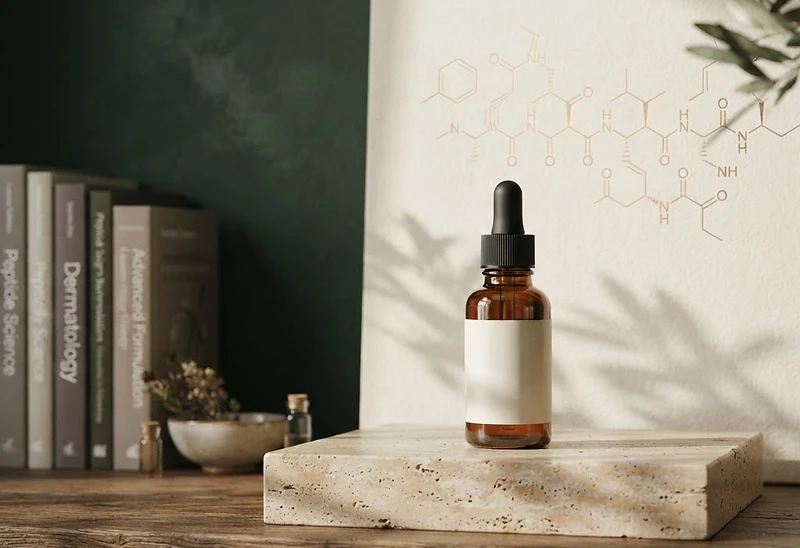
Amber glass serum bottles arranged on a cool stone surface
Topical Peptide Education

The Peptide Library

An educational reference for topical cosmetic peptides. What each one is, what early research suggests, where it fits in a routine, and the honest limits of the evidence.

AI-curated reference · openly artificial intelligence

Educational reference for topical skincare. For medical treatments, consult a qualified clinician.

The Library

Topical Peptides, Explained

Acetyl Hexapeptide-8 (Argireline)

Acetyl Hexapeptide-8

Expression-Line Peptide
What it is

A short peptide sometimes described as a topical analog that aims to relax the look of expression lines.

What the evidence suggests

Early research suggests a temporary softening of expression-line appearance with regular use; effects are modest and cosmetic.

Routine placement

Both use

Pairing notes

Often applied to areas of expression. May be layered with hydrating products; avoid mixing with strong acids in the same step.

It cannot replicate the depth or duration of in-clinic neuromodulator treatments.

Acetyl Octapeptide-3 (SNAP-8)

Acetyl Octapeptide-3

Expression-Line Peptide
What it is

An elongated peptide that aims to soften the look of expression lines, a newer analog in the Argireline family.

What the evidence suggests

Early research suggests a modest, temporary cosmetic softening of expression-line appearance with regular use.

Routine placement

Both use

Pairing notes

Apply to expression areas; layer with hydrating products and follow with moisturizer.

It is cosmetic and temporary; it does not replicate in-clinic neuromodulation.

Acetyl Tetrapeptide-5 (EyeSeryl)

Acetyl Tetrapeptide-5

Signal Peptide
What it is

A peptide used in eye-area products to support a refreshed, less puffy look.

What the evidence suggests

Early research suggests it may help reduce the appearance of under-eye puffiness over weeks of use.

Routine placement

AM use

Pairing notes

Apply to the orbital bone; pairs with hydrating eye creams. Avoid direct contact with the eye.

Effects are cosmetic and temporary; individual results vary.

Caprooyl Tetrapeptide-3

Caprooyl Tetrapeptide-3

Signal Peptide
What it is

A signal peptide that supports the skin's structural maintenance work.

What the evidence suggests

Early research suggests it may help skin appear firmer and more even with regular use.

Routine placement

Both use

Pairing notes

Pairs with hydrators and lipid-rich moisturizers.

Evidence is preliminary.

Copper Tripeptide-1 (Topical)

Copper Tripeptide-1

Copper Peptide
What it is

A copper-binding peptide used in topical serums to support the skin's natural repair and barrier work.

What the evidence suggests

Early clinical research suggests it may support barrier resilience and the look of even tone; topical cosmetic use only.

Routine placement

PM use

Pairing notes

Many formulators separate vitamin C and copper peptides into AM and PM routines; follow your product's instructions and patch test.

Topical cosmetic effects differ from any medical or injectable use; this library covers skincare only.

Dipeptide Diaminobutyroyl Benzylamide Diacetate (Syn-ake)

Dipeptide Diaminobutyroyl Benzylamide Diacetate

Expression-Line Peptide
What it is

A peptide inspired by temple viper venom, used topically to soften the look of expression lines.

What the evidence suggests

Early research suggests a temporary, cosmetic softening of expression-line appearance with regular use.

Routine placement

Both use

Pairing notes

Apply to expression areas; layer with hydrating products.

Effects are modest and cosmetic; it does not replicate in-clinic treatments.

Hexapeptide-9

Hexapeptide-9

Signal Peptide
What it is

A peptide that supports the skin's structural and repair processes.

What the evidence suggests

Early research suggests it may support the appearance of density and smoothness over time.

Routine placement

Both use

Pairing notes

Layer under moisturizer; generally well tolerated with hydrating actives.

Independent, long-term studies are limited.

Palmitoyl Dipeptide-5 Dihydroxyacetine

Palmitoyl Dipeptide-5 Dihydroxyacetine

Carrier Peptide
What it is

A carrier peptide designed to help deliver ingredients and support collagen-supporting signals.

What the evidence suggests

Early research suggests it may support the look of firmness when used in formulated products.

Routine placement

PM use

Pairing notes

Often used in peptide complexes; layer under moisturizer.

Independent confirmation of solo benefit is limited.

Palmitoyl Hexapeptide-12

Palmitoyl Hexapeptide-12

Signal Peptide
What it is

A peptide that supports the skin's lipid balance and the feeling of suppleness.

What the evidence suggests

Early research suggests it may support barrier comfort and a softer, more elastic feel over time.

Routine placement

Both use

Pairing notes

Pairs well with ceramide and lipid-rich moisturizers.

Evidence is preliminary and largely from small studies.

Palmitoyl Pentapeptide-4 (Matrixyl)

Palmitoyl Pentapeptide-4

Signal Peptide
What it is

A signal peptide that sends a message to skin cells to support the work that keeps skin feeling firm and resilient.

What the evidence suggests

Early clinical research suggests it may support the appearance of skin density and smoothness over several weeks of consistent use.

Routine placement

Both use

Pairing notes

Often layered under moisturizer. Generally well tolerated alongside hydrating serums and niacinamide.

Most evidence comes from small, short-term studies funded by ingredient manufacturers.

Palmitoyl Tetrapeptide-7

Palmitoyl Tetrapeptide-7

Signal Peptide
What it is

A signal peptide often paired with other peptides to support skin's calming and structural balance.

What the evidence suggests

Early research suggests it may help reduce the look of reactivity and support a calm, even appearance.

Routine placement

Both use

Pairing notes

Commonly combined with palmitoyl tripeptide-1 in blends; generally layerable with hydrators.

Much of the data comes from blend studies, making solo effects hard to isolate.

Palmitoyl Tripeptide-1

Palmitoyl Tripeptide-1

Signal Peptide
What it is

A signal peptide that encourages skin to maintain the structural work that keeps it feeling firm.

What the evidence suggests

Early research suggests it may support the appearance of smoothness when used consistently over weeks.

Routine placement

Both use

Pairing notes

Often found in peptide blends; layer under moisturizer and pair with hydrating actives.

Independent, long-term studies in real-world routines remain limited.

Palmitoyl Tripeptide-38 (Matrixyl Synthe'6)

Palmitoyl Tripeptide-38

Signal Peptide
What it is

A signal peptide that encourages skin to maintain key structural proteins for a smooth surface.

What the evidence suggests

Early research suggests it may support the appearance of smoothness and tone over consistent use.

Routine placement

Both use

Pairing notes

Layer under moisturizer; often paired with hydrating serums.

Data is largely from manufacturer-supported studies.

Palmitoyl Tripeptide-5

Palmitoyl Tripeptide-5

Signal Peptide
What it is

A signal peptide that supports the skin's structural maintenance for a firmer feel.

What the evidence suggests

Early research suggests it may support the appearance of firmness and smoothness over consistent use.

Routine placement

Both use

Pairing notes

Pairs with hydrating serums and lipid-rich moisturizers.

Evidence is largely from small, manufacturer-supported studies.

Sh-Polypeptide-1 (Topical)

Sh-Polypeptide-1

Growth-Factor Peptide
What it is

A bioengineered peptide used in topical skincare to support the skin's renewal processes.

What the evidence suggests

Early research suggests it may support the appearance of renewal and smoothness in formulated products.

Routine placement

PM use

Pairing notes

Layer under moisturizer; often paired with hydrating actives.

Topical absorption and activity of larger peptides remain an open research question.

Tripeptide-1 (GHK, non-copper)

Tripeptide-1

Signal Peptide
What it is

A peptide that supports the skin's natural repair and structural work, without added copper.

What the evidence suggests

Early research suggests it may support barrier resilience and the look of even tone.

Routine placement

Both use

Pairing notes

Pairs with hydrating serums and niacinamide; layer under moisturizer.

Most studies are small and short-term.

Storage & Stability

Keeping Peptide Serums Effective

  • Keep peptide serums cool and dark — a drawer or cabinet away from direct sun and heat.
  • Seal tightly after each use; air exposure degrades aqueous serums over time.
  • Watch for texture changes (cloudiness, separation, scent shifts) as a sign to replace.
  • Aqueous peptide serums lose potency over time; note your open date and replace by the brand's guidance.
Editorial

The Supporting Cast

Peptides are a supporting cast, not the star of a pro-aging routine. The foundations come first: daily sunscreen, a retinoid if tolerated, and a healthy, resilient skin barrier. A peptide serum layered into that foundation may offer modest, gradual support, but it will not substitute for the basics.

For women in perimenopause and menopause, hormonal change drives much of the collagen decline that peptides cannot replace. Estrogen's influence on skin thickness, hydration, and structural support is substantial, and no topical peptide offsets it. This is not a reason for concern, it is a reason for realistic expectations and, where appropriate, a conversation with a qualified clinician about options beyond skincare.

Think of peptides as one instrument in a larger ensemble: valuable in combination, modest on their own, and most effective when the rest of the routine is already in tune.

Member Tool

Routine Compatibility Checker

Select items from your routine for educational pairing guidance. Calibrated, never urgent.

Sign in to load items from your saved routines. A default set is shown below.

Member Tool

Questions for Your Dermatologist

Generate a personalized, printable list of questions from your routine and concerns to bring to a qualified clinician. No clinic recommendations or referrals.

This is a member tool. Sign in to continue.

Sign In
Questions

Frequently Asked

Do you cover injectables?

No. The Peptide Library is topical skincare education only. For medical treatments, including injectable peptides, consult a qualified clinician.

Can you tell me where to buy peptides?

No. The Atelier recommends no suppliers and provides no purchase links. This is an educational reference, not a storefront.

Is this medical advice?

No. This is educational guidance about topical cosmetic skincare. It is not dermatological advice or a substitute for a clinician.

Is the Regulatory Watch legal advice?

No. The Regulatory Watch is a dated record of public regulatory developments for context only. It is not legal or medical advice, and a recommendation is not an approval.